
Stud Earring Components: Specify Posts and Backs
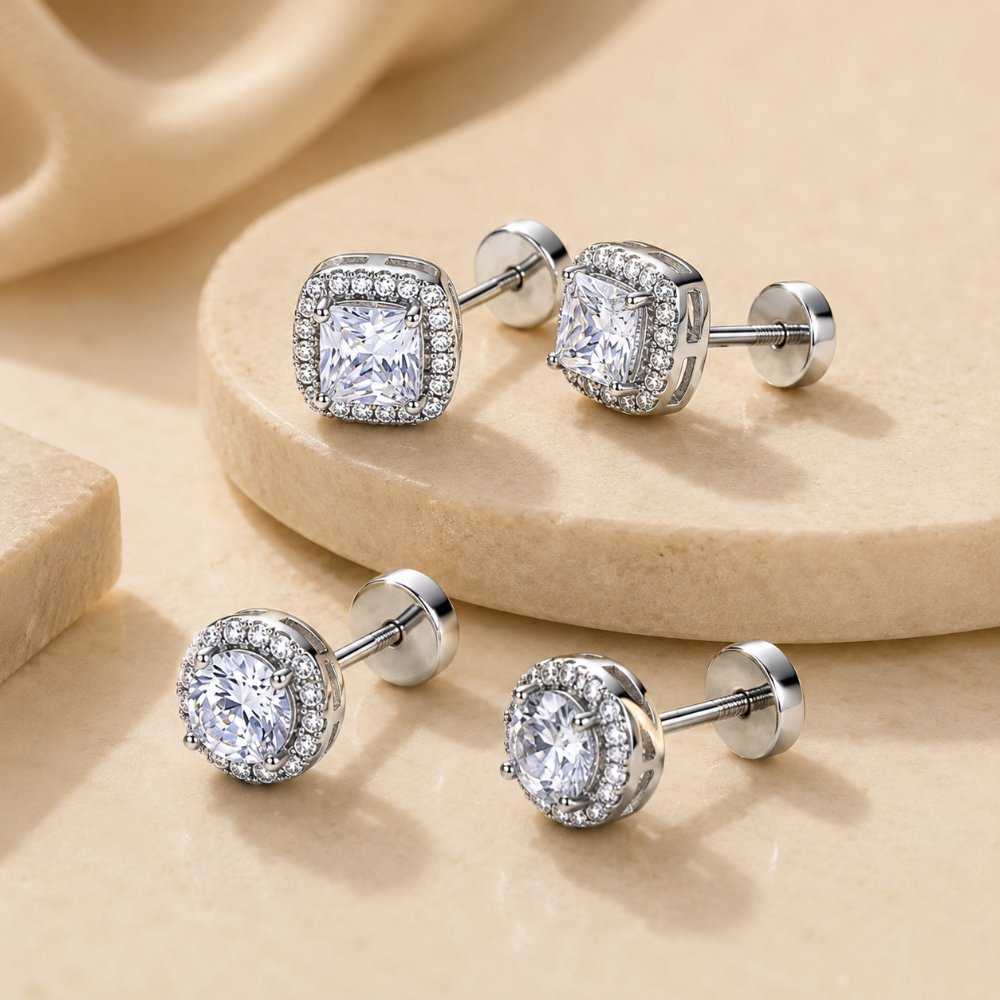
The catalogue includes angled views with posts and disc-shaped backs visible. Use them to identify the question, then ask for the current offered component references and sample details.
A stud earring component request should identify the post, the back and the complete earring version they belong to. Ask the supplier for its component references, the relevant specification details and clear side and rear views of an actual offered sample. Confirm the relationship of those components on the complete sample rather than assuming that similar-looking backs fit every stud.
The Suren Jewelry halo stud listing includes square and round designs and an angled catalogue image in which posts and disc-shaped backs are visible. That is enough to locate a component inquiry, but it does not establish the internal construction, dimensions or interchangeability of the pictured pieces. A focused request can resolve the information needed for the actual order.
Identify the complete earring before the loose component
Start with the supplier product reference and the particular design being considered. Attach the selected picture and mark the relevant post or back. Ask whether the square and round designs use the same component references or different ones. Keep the supplier’s answer linked to the current sample version rather than applying it automatically across the catalogue.
If the buyer wants a particular backing arrangement, describe it as a requirement to review. Ask the supplier what it can offer and how the proposed component relates to the complete earring. A requested alternative should not silently replace the component originally shown or become part of an order merely because it appears in an informal message.
Request views that answer component questions
A front view identifies the decorative head, while a side view can show the post in relation to that head. A rear view helps identify the backing arrangement offered with the sample. Ask for labelled views of the same sample so the buyer can connect those features. If the supplier uses a separate component drawing, keep its reference beside the photographs.
Use an actual offered sample when a catalogue view leaves the detail unclear. Ask the supplier to indicate the intended positions and the component name. Avoid naming a hidden closure mechanism from the outer disc shape. The purpose is to receive a clear description of the offered arrangement, not to turn the visible outline into a construction specification.
The front arrangement identifies the square and round designs. The corresponding post and back details need to be linked to those particular offered versions.
Ask for the relevant dimensions with their definitions
Where the purchasing requirement depends on post or backing dimensions, request the supplier’s applicable drawing or specification. Ask it to name the dimension and its measurement reference. Keep the units stated in the response. Do not estimate post length or thickness from a perspective image or add a missing unit to an unlabelled catalogue number.
The buyer should state why a requested detail matters to the order so the supplier can address the appropriate component. Record a supplier-proposed alternative separately from the original requirement. Agree the relevant details before issuing a final specification, with any unanswered field clearly visible to the purchasing decision-maker.
Component question | Information to request | Record to keep
Complete earring identity | Supplier reference, design and sample version | The assembly to which all component answers apply
Post identification | Component description and reference, where used | Current supplier answer and applicable sample view
Backing identification | Offered back reference and construction description | Side or rear view tied to the same sample
Required dimensions | Named measurements, units and relevant drawing | Supplier specification without photo-based estimates
Component relationship | Confirmation for the particular complete earring | No assumed interchangeability across listings
Alternative request | Supplier response to the proposed change | Revised sample or specification where needed
Order release | Confirmed version and unresolved fields | A clear decision about the complete sample
Review the complete sample using agreed instructions
When samples are supplied, check the labels against the component response first. Keep the supplied back with the earring it accompanies during review. Ask for the applicable handling or use information if the buyer needs to examine how the components work together. Record observations from the agreed check without presenting them as a wider durability or retention test.
If the observed sample differs from the supplier’s written description, identify the specific feature and request clarification. A labelled side or rear photograph is more useful than a general statement that the backs are wrong. Keep the affected sample identifiable until the supplier confirms whether the description, component or sample needs to change.
This separate Lumina listing is another product reference. Similar fronts do not prove that its posts or backs match the components in the other selected listing.
Keep component identity separate from material claims
Request the supplier’s written material information for the complete version and relevant components when it matters to the purchase. The decorative head, post and back should not automatically be assigned one material description merely because a listing uses a broad product title. Ask which statement applies to which component and keep the answer in the specification record.
A visible pale finish or a back that fits a sample does not establish metal purity, coating thickness, skin compatibility or other performance. Treat those as separate requirements with their own supplier information. This keeps a practical component-identification decision from being used later as evidence for a claim it never addressed.
Control substitutions at the component level
If a proposed post or back changes, ask which complete earring versions are affected. Request an updated component response and any sample needed to review the change. Record whether the buyer accepts that revised version for the intended order. Keep the earlier references so the warehouse and purchasing team can distinguish old stock from newly approved supply.
Link every component answer to a complete earring and sample version.
Keep requested alternatives separate until the supplier confirms them.
Record the final agreed component description with the purchasing file.
A precise component inquiry combines the selected design, marked views and the specific open questions the supplier needs to answer. Send the selected listing and your request through Suren Jewelry’s contact page. The blog provides broader purchasing context.
Frequently Asked Questions
Does a disc-shaped back identify its internal construction?
No. It identifies a visible appearance. Ask the supplier to describe the actual offered component and provide the relevant sample views or specification.
Can the same back be used for every stud in the catalogue?
That requires confirmation for the relevant complete earring versions. Similar front shapes or colours do not establish component interchangeability.
Should a changed back receive a new sample reference?
Identify the revised component and the complete earring versions affected. Use a revised sample or specification record where needed so the approval clearly refers to the intended supply.
Stud EarringsComponent SpecificationsPosts and BacksSupplier DocumentationSample Review