
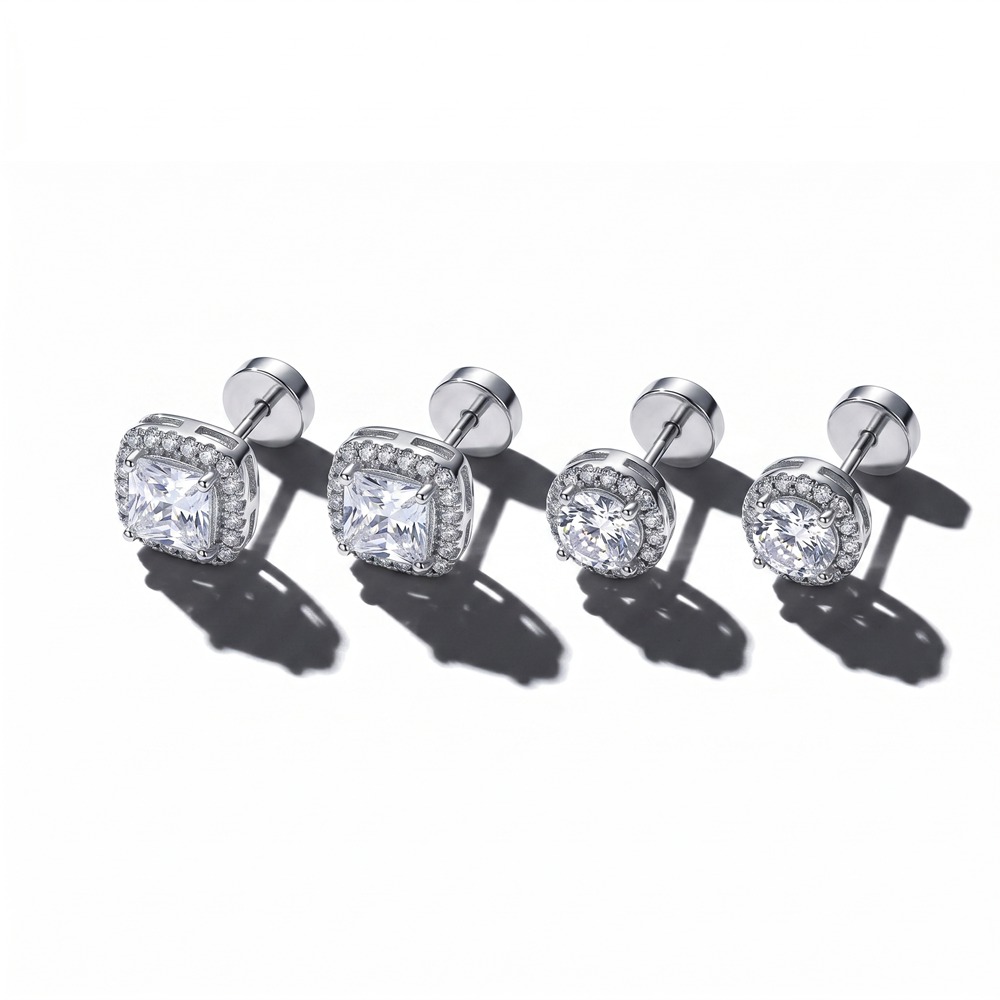
For a wholesale stud earring set RFQ, map each design to its required pair count, individual earring count, backing reference and packing unit. Attach one approved appearance reference to each row. Ask the supplier to quote against that same map. The word set alone does not tell a buyer how many designs, pairs or sellable packs the offer includes.
Start with the selected catalogue entry
The Suren Jewelry halo stud earring set entry describes an assortment as two pairs. Its catalogue images show square and round halo-style designs in several arrangements. Use that page to identify the enquiry, then ask the supplier to confirm which design combination and version the quotation covers. A product title and a styled image should point to a precise assortment record rather than serve as competing definitions of the order.
Save the product URL with the requested version and quotation date. The Suren Jewelry directory contains other earring and jewellery sets, including similarly named items. Keep those separate when requesting samples. A broad family name, shared colour appearance or similar display background does not establish that two listings contain the same components or are sold in the same unit.
Separate set, pair, piece and pack
Use pair for two earrings intended to be supplied together, and ask how the supplier uses piece on the quotation. A piece may mean one earring in a count sheet, while a sales document may use it for a packaged unit. Record the supplier’s definition explicitly. Set is an assortment label whose contents need to be listed; pack is the packaging level being discussed. Neither should replace the component schedule.
For a proposed assortment with a square-design pair and a round-design pair, create two design rows. Give each row a proposed pair count and show the corresponding individual earring count separately. This is a worksheet example, not confirmation of the catalogue item’s shipped contents. Let the supplier respond against the rows and resolve any difference before the buyer uses the quotation for purchasing or retail inventory.
Give each design its own appearance reference
Choose a clear reference for the front shape and visible arrangement of each design. Label the square and round entries separately instead of describing the complete assortment only as halo studs. Ask the supplier to identify any offered differences in size, finish appearance or construction. Where a size field has no clear unit or measurement definition, request clarification rather than adding an assumed unit to the RFQ.
A separate catalogue entry can show a similar design combination without identifying the same order version. The Lumina halo stud set entry therefore needs its own selected reference. Repeated views of a design do not represent additional items in a set. Keep component identity separate from photographic arrangement so a receiving team knows what it should count when the order arrives.
Use a pair map that the supplier can answer
Prepare the following fields before comparing offers. The map connects a design identity to an order quantity and a packaging level, while leaving unconfirmed details visibly open. It is an enquiry tool rather than a completed specification or inspection result. Each supplier should answer the same fields so that a difference in wording does not disappear inside an apparently similar total price.
Map field | Buyer request | Supplier confirmation
Square-design row | Approved front-view reference and proposed pair count | Which exact design and version does the response cover?
Round-design row | Separate appearance reference and proposed pair count | Is this design included in the same quoted assortment?
Individual count | Earring count corresponding to each design row | Does piece mean one earring or a different sales unit?
Post and backing | Proposed component reference and quantity definition | Which backs accompany the selected version?
Retail packing | Design allocation in the proposed sellable pack | How many confirmed assortment units belong in this pack?
Outer packing | Pack allocation and carton information | Which confirmed retail units are included in each carton?
• Keep one row for each selected design.
• Show the quantity unit next to every quoted number.
• Link posts and backs to the identified sample version.
• Record retail and outer packing as separate levels.
Keep appearance approval separate from material claims
The selected product page uses different finish wording in its descriptive paragraph and specification fields. Preserve the actual source statements and request one written clarification for the quoted version. Do not choose a plating description merely because the catalogue image appears bright or pale. Product photography, illustrations and screen colour cannot establish metal composition, coating thickness or the identity of an applied finish.
Ask for the relevant supplier documentation when material or performance requirements matter to the order. Pair-count approval does not establish skin compatibility, fading resistance, stone retention or a certification. Those questions need their own scope and evidence. Keep a pending material response separate from an agreed assortment map, so a buyer can see which purchasing questions have been resolved and which remain open.
Connect quotation, sample and receiving records
Give the proposed map a revision reference and send it with the sample request. When a sample is supplied, identify it against the returned map and record any difference in design, count or included components. If the supplier offers a substitution, ask which row changes and request a revised response. Do not allow a replacement image to silently redefine a previously discussed assortment.
Keep the accepted quotation, component references and packing schedule together for the receiving team. Count the agreed units at the appropriate packing level rather than treating a carton, retail pack and pair as interchangeable. A shipment discrepancy can then be described as a specific design or quantity difference. Pricing, minimum order quantities, delivery dates and available customization still belong in the supplier’s written offer for that order.
Frequently asked wholesale questions
Does a photo of four earrings prove that every set contains four?
No. It is a catalogue appearance reference. Ask the supplier to confirm the selected design rows, pair count, individual earring count and retail packing unit in the quotation.
Can the buyer quote only a total number of sets?
A total is useful after the contents of one set have been defined. Attach the component map so the supplier and buyer can connect that total to the same assortment and quantity unit.
Should the backing be recorded separately?
Yes. Request the proposed post and backing reference for the selected sample and define the included quantities. Visible disc-shaped backs alone do not establish construction or interchangeability between designs.
Can finish or metal composition be approved from colour?
No. Ask for a clear supplier specification for the quoted version and the evidence required for your purchasing criteria. Keep material and performance review separate from appearance and pair-count approval.
What should accompany the first enquiry?
Send the exact product URL, the design references, a proposed pair map and the required packing-level definitions. Request a quotation against those same rows and leave unanswered fields open until clarification is received.
For more purchasing context, visit the Suren Jewelry blog. To discuss a selected stud earring assortment, use the contact page and include the catalogue link plus your proposed pair map. A clear component schedule gives the supplier a practical structure for answering the enquiry and gives the buyer a consistent basis for reviewing the offer.
Product and contact references
https://surenjewelry.com/product/product-3/
https://surenjewelry.com/products/
https://surenjewelry.com/product/lumina-halo-stud-set-rhodium-plated-copper-cushion-round-cut-cz-halo-earrings/
https://surenjewelry.com/blog/
https://surenjewelry.com/contact/